I have a high school reunion coming up.
That much time has passed already?
I didn’t realize how long it had been since I graduated. Time doesn’t announce itself. It sneaks up on you. And once you notice it in one part of life, you start seeing it everywhere.
The Changes Happen Slowly
Getting older doesn’t feel like one big moment. Your routines get more fixed. Mornings have a rhythm now. Workouts, school drop off and work obligations shape your weeks.
Responsibilities stack up. You’re scheduling appointments, tracking deadlines, and making sure things don’t slip through the cracks. You’re thinking about other people, not just yourself.
You start thinking a little further ahead than you used to. Not necessarily in a grand, life‑plan kind of way, but in small, practical ways. What does next year look like? What happens if something changes? What needs more structure than it used to?
Because these shifts happen gradually, we often don’t notice how much has changed until something forces us to pause.
Big changes rarely happen all at once. They happen in inches.
Time Has Been Passing the Whole Time
What that reunion really made me think about wasn’t my age, but rather how easy it is to underestimate time.
There are things many of us want to look at eventually. Retirement accounts. Insurance coverage. Estate documents. Cash flow. Investments. But we don’t yet because they don’t feel urgent. So, they stay on the list.
Time moves on anyway.
This shows up everywhere, but especially with financial decisions.
Where I See This Most with Money
People don’t avoid planning because they’re irresponsible. They avoid it because early on, nothing feels pressing. Retirement feels far away. Investing feels optional. Planning feels like something you’ll do once things “settle down.”
But life rarely settles down on its own.
No one accidentally ends up financially independent. It takes intention and it takes time. Time can work in your favor, or it can work against you. The difference is whether you’re paying attention.
Waiting often feels easier in the moment. Starting feels harder. But starting is what actually creates flexibility later.
Waiting Feels Easier. Starting Matters More.
When people put off investing or planning, the biggest cost isn’t the market. It’s time.
Compounding doesn’t require perfect decisions. It rewards consistency.
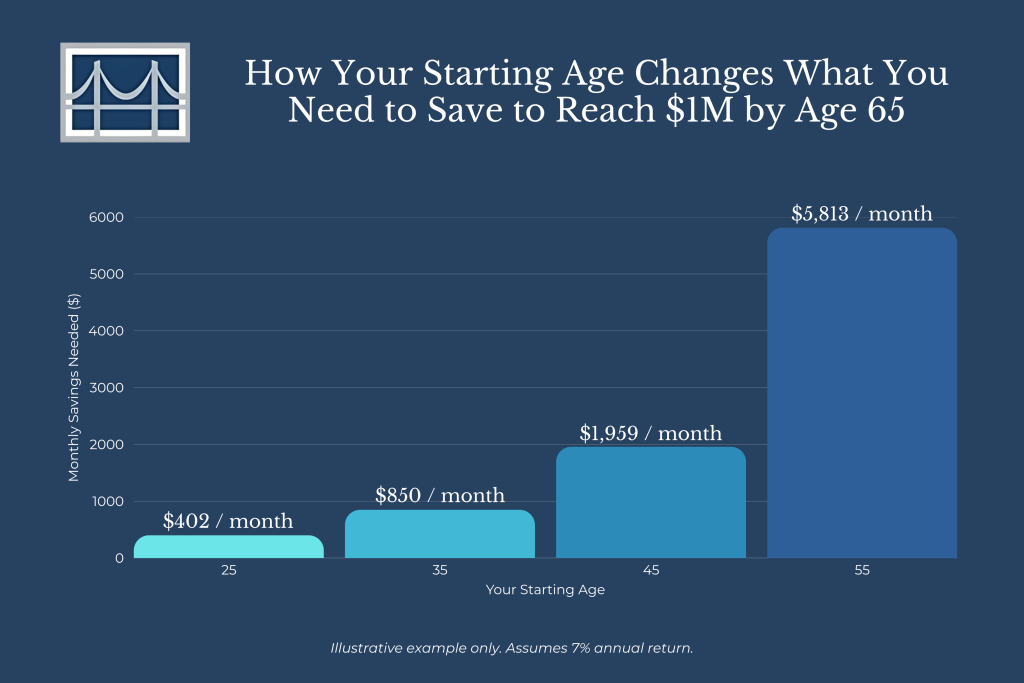
Here’s a simple illustration of how starting age changes the math.
Let’s say two people both want to reach $1 million by age 65.
One starts investing at 25 while the other waits until 45.
Assume a reasonable long-term return.
The 25-year-old needs to save roughly $400 / month to get there.
The 45-year-old needs closer to $2,000 / month to reach the same goal.
Same finish line. Very different pressure.
The difference isn’t effort.
It’s time.
Waiting doesn’t just delay progress. It changes the entire math. And often, it limits options later.
Small steps taken early matter more than trying to make everything perfect later. You don’t need to have it all figured out. You just need to start.
The Hidden Cost of “I’ll Get to It Later”
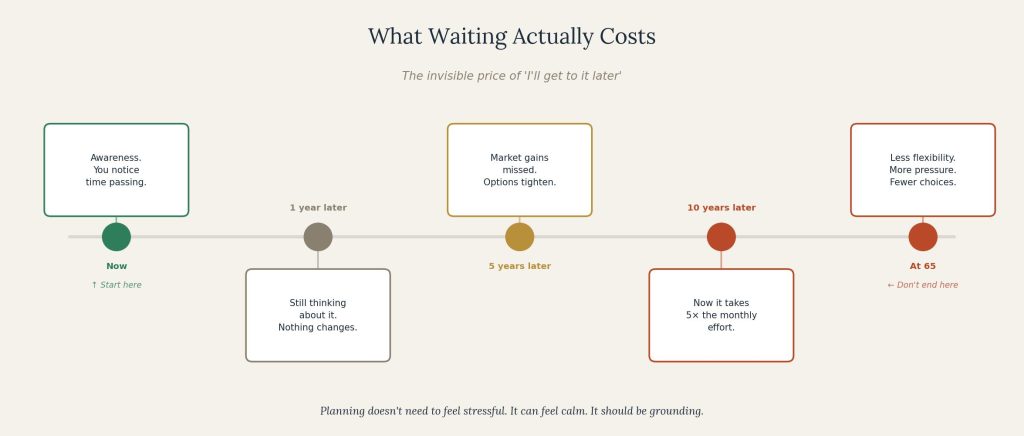
One of the hardest parts about money decisions is that the consequences of inaction are invisible at first. There’s no alert that pops up telling you that you missed an opportunity to start earlier. No statement showing what could have been.
Instead, what shows up later is stress. Pressure. Fewer choices. A sense that things suddenly feel tighter than expected.
Most people don’t regret that they didn’t make perfect decisions. They regret that they didn’t start sooner.
What Being Financially Responsible Actually Means
Being financially responsible isn’t about having all the answers.
It’s about not making assumptions.
It’s about planning and looking at the numbers, even when it’s uncomfortable or scary. Especially then.
It means putting simple systems in place. Checking in as life, income, and priorities change. Adjusting as needed.
Most people don’t need dramatic moves. They need a plan that fits the life they’re living.
Awareness Doesn’t Have to Feel Heavy
Realizing how quickly time passes doesn’t mean you’re behind.
It means you’re aware and awareness creates options.
There is almost always something you can do now that makes the future feel steadier. That might mean starting a retirement account. Increasing a contribution slightly. Reviewing investments. Or simply understanding where you stand.
Planning doesn’t need to feel stressful. It can feel calm. It should be grounding.
Stepping Into the Role You’re Already In
That reunion didn’t make me feel old, but rather it made me feel aware of where I am.
It made me want to be intentional about what comes next, instead of assuming there will always be more time to figure it out.
Awareness is the turning point.
What you do with it is up to you.
Frequently Asked Questions
The time is rarely going to feel “right.” Most people don’t wake up one day and think, “I need comprehensive financial planning.” Instead, it’s usually prompted by a life event, marriage, the birth of a child, a loss in the family, divorce, or a meaningful change in income or responsibility.
Because the timing never feels perfect, waiting often becomes the default. When life starts to feel more complex, that’s usually a good signal to pause, understand where you are today, and make thoughtful decisions as things evolve.
This is an incredibly common feeling. It can be easy to push it down and ignore it, but it’s often worth sitting with it for a moment. Think about how you want to feel five years from now, or ten years from now.
Life rarely goes according to plan. What matters most is not meeting past expectations, but taking steps that support the life you’re actually living. Planning for real life, not a perfect version of it, can help you feel more grounded and confident simply by getting started. Feeling behind doesn’t mean you’ve failed. It usually means it’s time to start paying attention and that can change the trajectory of your future.
There isn’t a single number you’re supposed to have saved or a checklist that can tell you whether you’re “on track.” Finances are highly personal. An amount that works well for one family can look completely different for another, depending on goals, priorities, and life circumstances.
It’s also not helpful to look at your situation in a vacuum. Think about cooking: tasting one ingredient on its own doesn’t tell you how the dish will turn out. It’s how all the ingredients work together that determines the result.
The same is true with finances. Cash flow, investments, taxes, savings, and future goals all influence one another. Looking at the full picture helps you understand whether your current decisions truly support where you want to go.
Investing focuses on where your money is placed. Financial planning looks at how everything fits together, including cash flow, savings, investments, taxes, and future goals.
Investing is a means to an end. It isn’t about chasing returns or taking on excess risk. It’s about using your investments to support what you’re trying to achieve over time. Planning provides the context, so investment decisions are made in service of your goals.
Professional guidance can be helpful when questions start to feel harder to answer on your own or when decisions begin to carry more weight.
For many people, the value is having a thoughtful partner to talk things through with. Someone who can help connect the dots, ask the right questions, and provide perspective as you make decisions. It can help you feel more confident in the direction you’re heading.

Ashley Hamman, CFP®, is a Vice President at Bridgeview Capital Advisors, Inc. She works with individuals and families on financial and tax planning and investment management, with a focus on helping people navigate real-life decisions with clarity and confidence as things change.
If this article sparked questions, sometimes talking things through can help bring clarity.